

“
I was the beneficiary of what many Canadians believe to be the chief American attitude to Canada: amiable indifference.
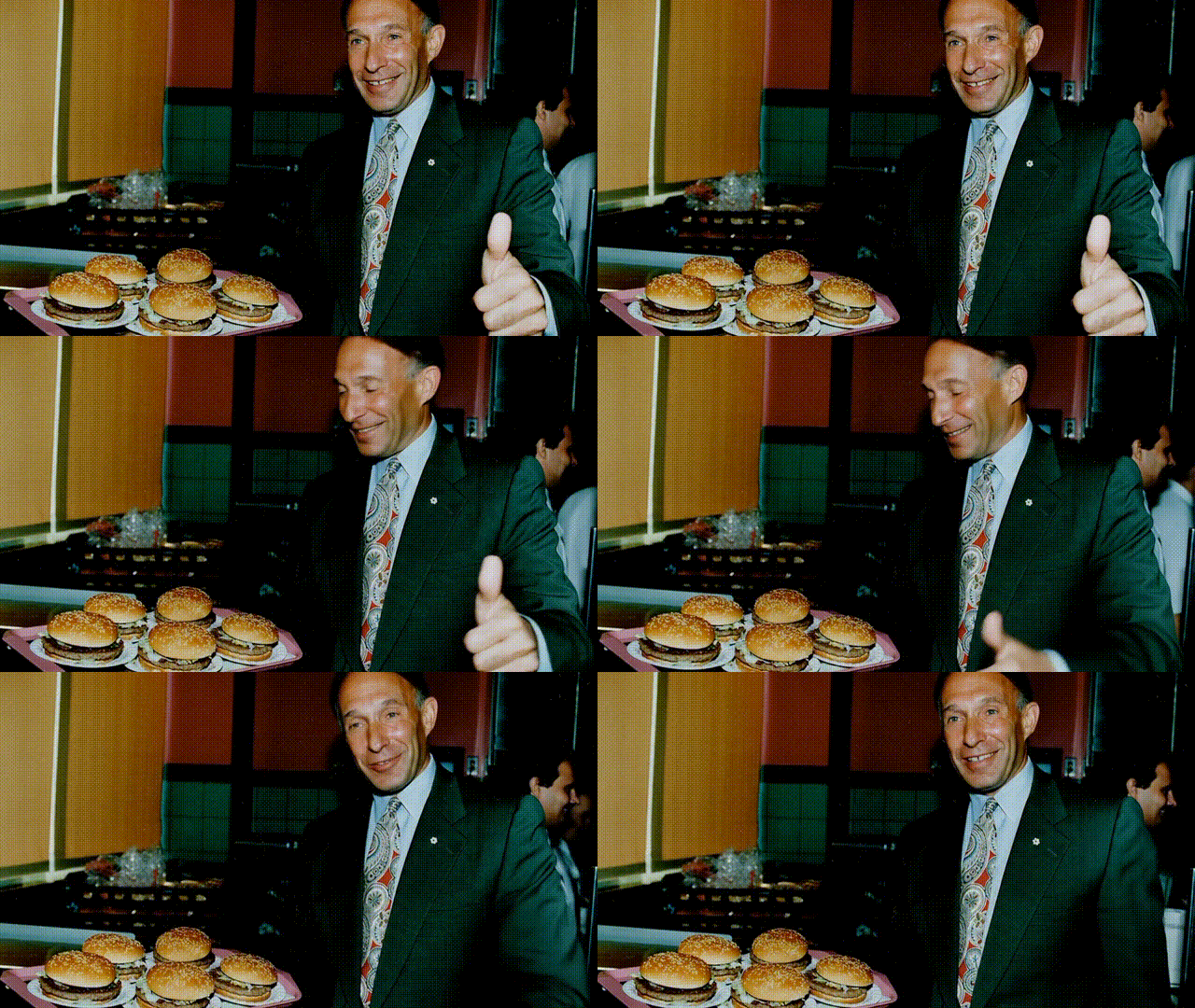
At 30 years old, George Cohon had a comfortable life. It was 1967, and the corporate lawyer from Chicago was on a clear path to success. Yet, he chose to risk it all, leaving behind a promising career to bring the McDonald’s brand to a country he had no connection to: Canada. He borrowed $70,000 to purchase the franchise rights for Ontario, and as he put it: “I was the beneficiary of what many Canadians believe to be the chief American attitude to Canada: amiable indifference. I was awarded exclusive and perpetual rights to most of Eastern Canada — which, I think, as far as McDonald’s was concerned, was like awarding me exclusive and perpetual rights to the North Pole.”
This single, audacious decision would not only build a fast-food empire but also fundamentally reshape Canadian franchising and corporate philanthropy.
Arriving in Toronto as a newcomer, Cohon found that scaling his business the traditional way was impossible. Canadian banks were skeptical, and existing supply chains were inadequate. This obstacle became his greatest advantage. Instead of relying on imports, Cohon built a Canadian supply chain from the ground up. He forged partnerships with small, local suppliers for everything from beef to potatoes, injecting millions into the Canadian economy and creating a resilient, self-sufficient operation. This grassroots approach was the first step in his "Canadianization" doctrine.
This doctrine was a masterstroke of business integration. Cohon understood that to succeed, McDonald's couldn't just be an American import; it had to feel Canadian. He adapted menus to local tastes, sourced ingredients from Canadian farmers, and ensured that the business was run by Canadians for Canadians. He even convinced his American bosses to add a maple leaf to the iconic Golden Arches logo, a feature unique in the company's global branding to this day. His commitment was so profound that he was appointed President and CEO of McDonald's Canada in 1971, four years before becoming a Canadian citizen.
Cohon’s ambition, however, didn’t stop at the Canadian border. In 1976, a chance meeting with Soviet officials at the Montreal Olympics sparked a 14-year odyssey to bring the Big Mac to the Soviet Union. It was a feat of "burger diplomacy" that required every ounce of his tenacity. Facing a lack of infrastructure in a communist state, Cohon replicated his Canadian playbook on a massive scale. He built a $40 million food-processing plant and taught Soviet farmers how to grow potatoes and raise cattle to McDonald’s standards. When the first Moscow location finally opened in 1990, it served over 30,000 people in a single day, shattering global records. Cohon had managed to deliver a taste of freedom and free enterprise to a collapsing empire, an accomplishment he detailed in his book To Russia With Fries.
Back home, Cohon’s strategy extended beyond the storefront to embed the Golden Arches into the very fabric of community life. By sponsoring youth hockey and soccer, he connected the brand to the cherished pastimes of Canadian families, making McDonald's a ubiquitous presence in arenas and on playing fields across the country.
This community-first philosophy fueled his most enduring legacies. A tireless philanthropist, Cohon co-founded Ronald McDonald House Charities (RMHC) in Canada, providing a home away from home for the families of sick children. When Toronto’s beloved Santa Claus Parade was on the brink of cancellation in 1982, it was Cohon who stepped in to save it, cementing his status as a civic leader.
George Cohon’s story is a testament to the power of building. Though he arrived as an American entrepreneur representing a quintessential American brand, he embraced his new home completely. By investing in Canadian communities, empowering local suppliers, and weaving his business into the national identity, he built McDonald’s Canada into a Canadian institution.
George Cohon died in Toronto in late November, 2023. Writing on X, his son Mark (a former commissioner of the CFL) said "Our family, Canada and the world lost a remarkable man."
