.jpg)
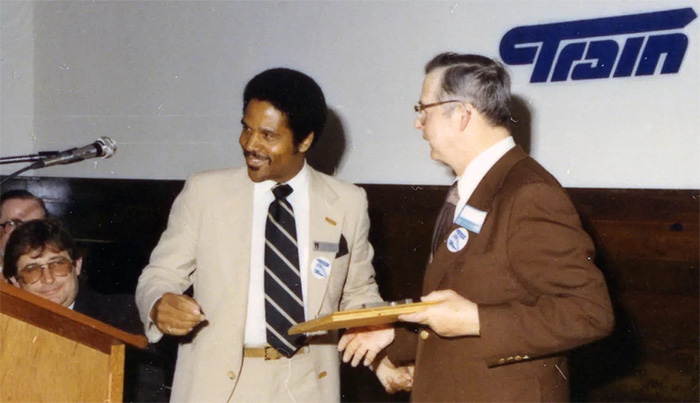
Oliver Bowen
Trains on the Plains
“His legacy, design and leadership are still benefiting Calgarians today”
Alberta is often called the Texas of Canada by people who have been to neither Texas nor Alberta. Alberta is unique, and one of the things that makes it unique is the light rail transit system in its largest city, Calgary. The C-Train is, by various measures, the most successful light rail transit system in North America. It moved nearly 100 million people in 2024, and on an average weekday approximately 300,000 Calgarians, a little under a third of the city’s population, will take the train. How did this transit system come into existence?
The architect of the system was a man named Oliver Bowen, a civil engineer who worked for the city. Bowen was born in Amber Valley, a small town north of Edmonton in 1942. His grandparents had fled the southern United States as part of the Great Migration, and hearing Clifford Sifton’s call to come to Canada, had been drawn further north. Oppressed by the Jim Crow laws of the South, African Americans had fled in search of freedom and opportunity. Oliver Bowen would take full advantage of the opportunity his grandparents had found in Canada.
A keen student, he attended the University of Alberta, graduating with a degree in engineering in 1965. His first job immediately after graduation was with the City of Calgary, working with the roads department. He quickly climbed the ranks, and by 1977, when construction of the C-Train was approved, he was placed in charge of the project. Light rail transit was not a well known technology in North America at the time. Edmonton had a similar system under construction, but it was not yet operating. While examples of light rail could be found farther afield in places such as Germany, those cities shared little in common with Calgary. Bowen faced a tough challenge. This was the largest transit project Calgary had ever undertaken, it involved a new technology, and together those are not often the ingredients of success. Yet he would prove more than equal to the task.
Any piece of effective civil engineering involves tradeoffs and quick decisions. Making those tradeoffs and decisions well is the mark of a good engineer. Immediately after the approval of the C-Train by city council in 1977, it became an issue in the looming mayoral election. Ross Alger, the winning candidate, campaigned on cancelling the project. Yet when Alger arrived in office he found that the contracts for the train cars had already been signed by Oliver Bowen’s team. Cancellation would incur significant penalties. The C-Train would go ahead.
Early in the construction of the C-Train plans had been put in place for a subway section downtown. But underground construction is not cheap, and with costs already ballooning, Oliver Bowen made the critical decision to switch to a surface line running on 7th Ave downtown. This cost-saving measure helped ensure the line was quickly expanded to the suburbs, driving ridership well above initial projections. Ultimately the project – which had a budget of $144 million with a five year timeline – was finished under budget and ahead of schedule. The success of the C-Train fed its growth, which helped embed itself in the fabric of the city.
This is a profoundly Canadian success story. A grandchild of immigrants escaping persecution helped guide the construction of this unique transit system. Oliver Bowen was recognized for his success and promoted to Director of Transportation for the city. He passed away in 2000 at just 57 years old, two short years after his retirement. Fittingly, in 2009, the City of Calgary recognized his contributions by naming their largest maintenance facility after him. His work shaped the face of Calgary, helping Calgarians get to and from their work, their schools, and their families.
Written by Nicolas Krause