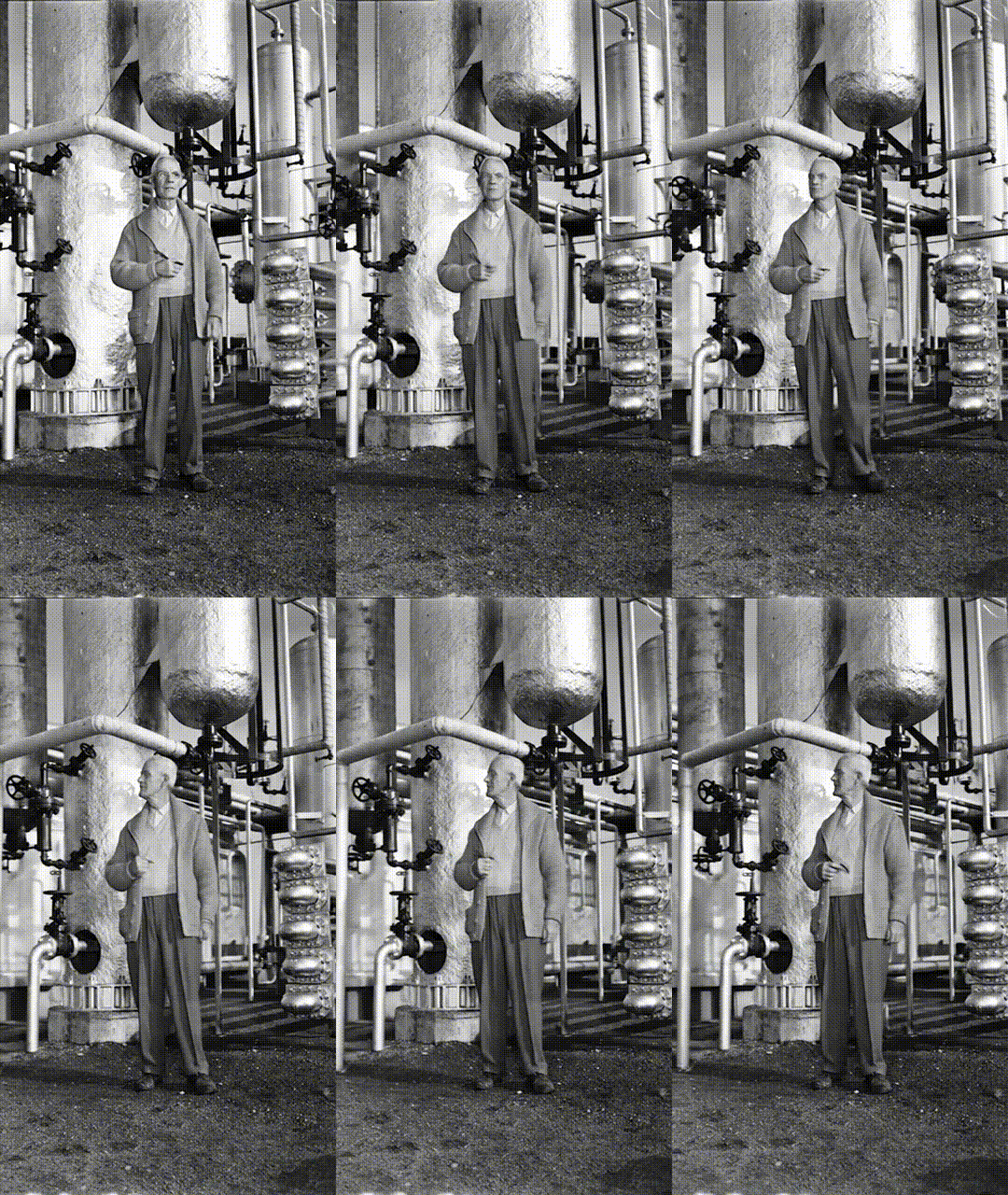
Karl Clark
The man who invented the oil sands
“It is now practical to regard the bitumen content of the bituminous sands as a crude oil and therefore a potential motor fuel.”
Before the oil sands were a place in northern Alberta where over 500 billion dollars was spent to unlock the trapped wealth, before they provided jobs to Canadians far and wide, and before they provided billions each year in royalties to government, they were a bog. And a bog they would have remained had human ingenuity not discovered how to separate the oil from the sand.
The problem with the oil sands is right there in the name, oil mixed with sand. You cannot refine it until one is not in the presence of the other. From the very beginning, entrepreneurs as well as the government understood that developing this enormous resource required a breakthrough in technology. Although the Geological Survey of Canada had first documented the oil sands in 1875, it was not until 1922 that this breakthrough would be demonstrated in a lab. The man who showed it was possible was Dr. Karl A Clark. A Canadian born in Georgetown Ontario, Dr. Clark was educated at McMaster University, before completing his PhD at the University of Illinois.
He returned to Ottawa where he worked at the Geological Survey of Canada before coming west to Edmonton in 1920. Setting up shop at the University of Alberta, within 2 years Dr. Clark had built a demonstration separation plant in the basement of the university power plant building. His technique used hot water to separate the oil from the sands, skimming it off the top as it floated to the surface. Clark refined the process over a number of years, making improvements that removed some initial extraneous caustic reagents, and it was patented in 1929. From there it was a natural next step to build a demonstration plant. Clearwater River, near Fort McMurray, was the chosen location. In the fall of 1929 this demonstration plant ran for three days, before shuttering for the winter. The next spring its equipment was upgraded and it ran successfully enough to attract interest from private investors. A purchase of the plant was agreed upon for the next year.
Then came the Depression. Financing for the deal fell through and government research funds were cut. The Clearwater River plant closed permanently, having run only for a single season. Dr. Clark continued his research, improving the process further, until the Research Council of Alberta was itself closed in 1933 after further cuts. With the Depression now in full swing, Dr. Clark found work in Trinidad, where he stayed for two years before returning to the University of Alberta.
Dr. Clark continued his research undeterred. With the Second World War, the allies had an enormous thirst for oil, but still the oil sands lay untapped. In 1946, Dr. Clark published a paper that would prove critical to improving oil sands yields at industrial scale. It was not until 1949, 27 years after his first demonstration, that a commercial pilot plant would produce crude from the oil sands at Bitumount. The next year, the Alberta Government’s Blair Report confirmed its commercial viability. Dr. Clark would retire just four years later.
He consulted with the oil industry in retirement, and lived to see Suncor’s first plant begin construction in 1964. He would not live to see it completed, his sun setting in 1966 when he passed away from cancer. The oil sands would not exist without the life’s work of this one man. The tax revenues they generate fund government services like healthcare and public education, and the jobs they provide feed families and employ Canadians of all stripes. We are all in Dr. Clark’s debt.
Written by Nicolas Krause