“
A drain well dug is as glorious as an opera
The early 1900s were not a good time to be born in Toronto. In 1910, one quarter of all deaths in the city were infants under the age of one. For every thousand live births, 140 children would not live to see their first birthday, a shocking death rate partly caused by poor sanitation and water quality. Yet by the early 1920s, infant mortality had fallen by half to 63.5 per thousand live births, and Toronto’s public health practices came to be considered the “gold standard” in North America.
There are several people who contributed to this achievement, but one figure in particular stands tall: Roland Caldwell Harris, who was the Commissioner of Public Works in Toronto from 1912 until his death in 1945. R.C. Harris was born in 1875 in Lansing village (now downtown North York) and started work in the city’s property department as a clerk in the early 20th century. He quickly gained attention as a hardworking competent bureaucrat and was appointed works commissioner in 1912. He was just 37 years old.
At the time of his appointment, the city was facing substantial growth pangs, with constant epidemics and water shortages. Harris’s own family had not been spared – in 1906 he lost a seven-month old son to erysipelas, a waterborne disease. Harris quickly threw himself into the work. In December 1913 he released his plan to address the water crisis by building a combined pumping and purification plant at Victoria Park. While the construction of this plant would not begin for almost two decades, in the meantime Harris rebuilt sewer mains and constructed a mid-town water reservoir on Spadina Road and St. Clair, which still operates today.
Harris did not just build Toronto’s water infrastructure, he also built transportation projects. Under his leadership, his department paved or constructed 700 miles of new roads and sidewalks, including iconic bridges at Spadina Road, Mount Pleasant, and the Vale of Acova. He oversaw the westward expansion of the streetcar network, constructing a new barn at Wychwood to accommodate its growth.
Harris fully recognized the value in unglamorous projects like sewer lines and roads. But the projects for which he is most famous show that he also understood the need for public works to be inspirational and visionary. When the Prince Edward Viaduct crossing the Don Valley was built in 1913, he pushed for the bridge to be fitted out with a platform capable of supporting subway tracks – 50 years before a subway was actually constructed. This resulted in tremendous cost savings when Bloor-Danforth subway line was built in the 1960s.
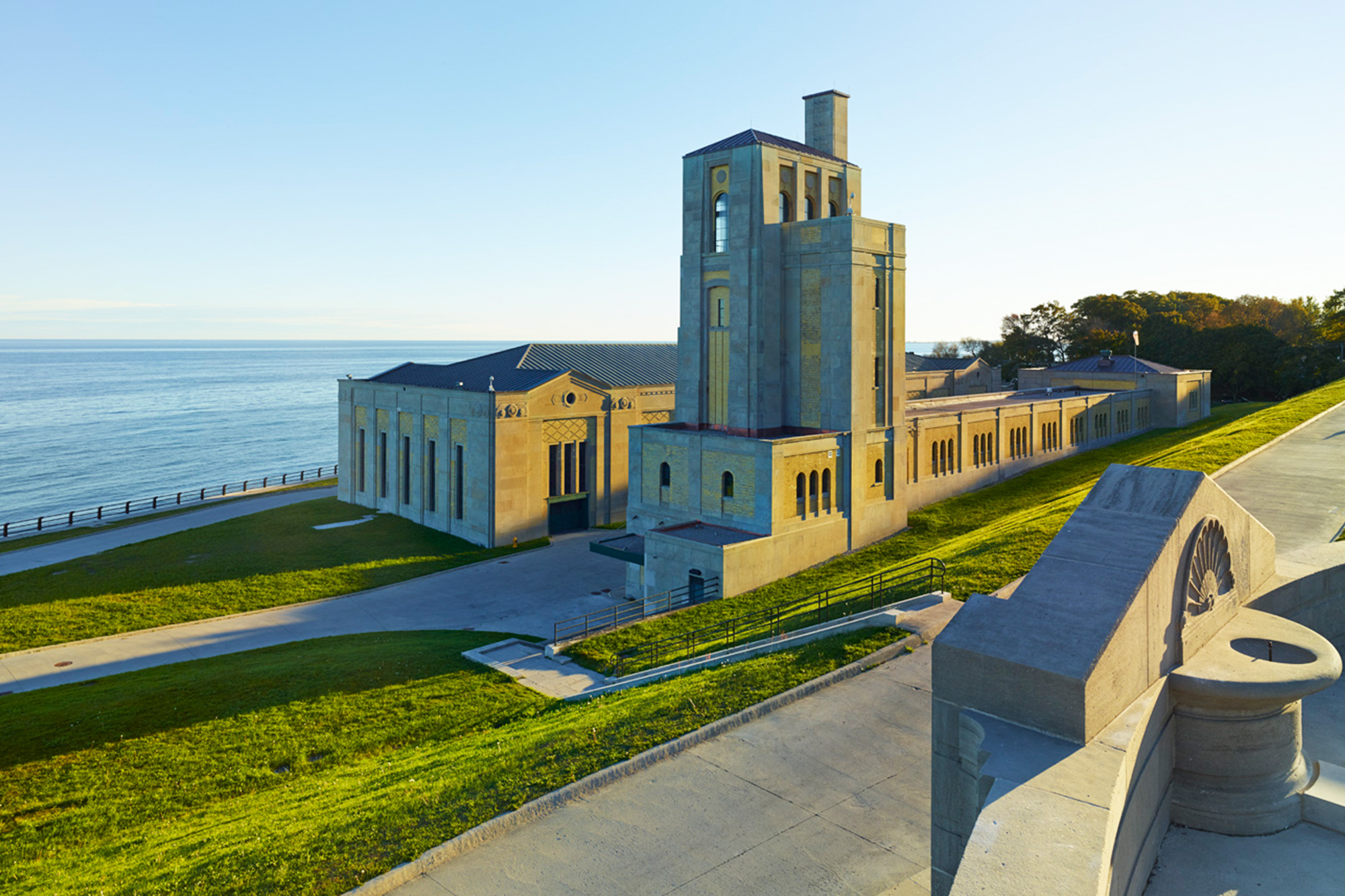
His magnum opus is the water treatment plant that bears his name, and which is immortalized in the Michael Ondaatje novel In the Skin of a Lion. Planned in 1913 but only constructed in the 1930s, Harris called for “handsome buildings, which in conjunction with the park section and the beach, will constitute one of the most beautiful areas in Toronto.” The result is not only a stunning example of Art Deco infrastructure, it was also designed to be scalable, with embedded piping included in the original construction that allowed capacity to be increased without major structural overhauls. Almost a hundred years since its construction, the plant still provides nearly 40% of Toronto’s drinking water today.
According to a 1922 news report, RC Harris delivered a speech to a gathering of the Women’s Liberal Association in which he “begged the ladies to know the sidewalks and the parks and the back lanes, and he particularly implored them to know the sewers and the water works. He asked them when they saw one of his men idling around a manhole not to think that this man was loafing. He was a sentinel for the man below, a hero who was crawling through an 18 inch pipe for the glory of Toronto. The man on top today, said Mr. Harris, would be tomorrow the man below and a hero in his turn...."
For his staunch belief in the glory of hard, unglamorous work to build critical infrastructure that is frequently unnoticed and unremarked upon by the millions who depend on it, R.C. Harris is a great Canadian builder.