“
I didn't think much of that German contraption and I thought I could do something better
On April 22, 1915, Germany launched the first ever large-scale chemical weapon attack near Ypres, Belgium. More than 136 tonnes of highly toxic greenish-yellow clouds of chlorine gas were unleashed by the German Army on French and Canadian troops. The response that was then set in motion by a Canadian doctor from Newfoundland, would change the course of the war for Allied soldiers.
Cluny Macpherson was born in St. John’s in the Dominion of Newfoundland on March 18, 1879 to parents Campbell Macpherson and Emma Duder. He received his early education at Methodist College, then his Medical degree from McGill Faculty of Medicine in 1901. He began his medical career at the Royal Infirmary of Edinburgh, but in 1902 returned to Newfoundland to develop his medical practice and expand his volunteer efforts with the Grenfell Mission and associated organizations. His focus on his medical career would eventually lead him from working in the first St. John’s Ambulance Brigade in Newfoundland, to enlist as a Captain and the first Principal Medical Officer in the new 1st Newfoundland Regiment when war broke out in August 1914. He served first in France and Belgium, and later was sent to Gallipoli.
The Allied response to the novel – and terrifying — use of gas by the Germans was at first inadequate. Cotton wool wrapped in muslin was issued to the troops, and that followed by the Black Veil Respirator1, a cotton pad soaked in an absorbent solution which was secured over the mouth using black cotton veiling.
In April 1915, Macpherson was briefly stationed in the UK, and in response to the gas attacks at Ypres he joined a couple of colleagues who were working on ways to improve on the Black Veil respirator. After a couple of false starts, Macpherson created a mask (the “Hypo Helmet”), made of chlorine-absorbing fabric that fitted over the head. It had a canvas hood treated with chlorine-absorbing chemicals, and was fitted with a transparent mica eyepiece2.
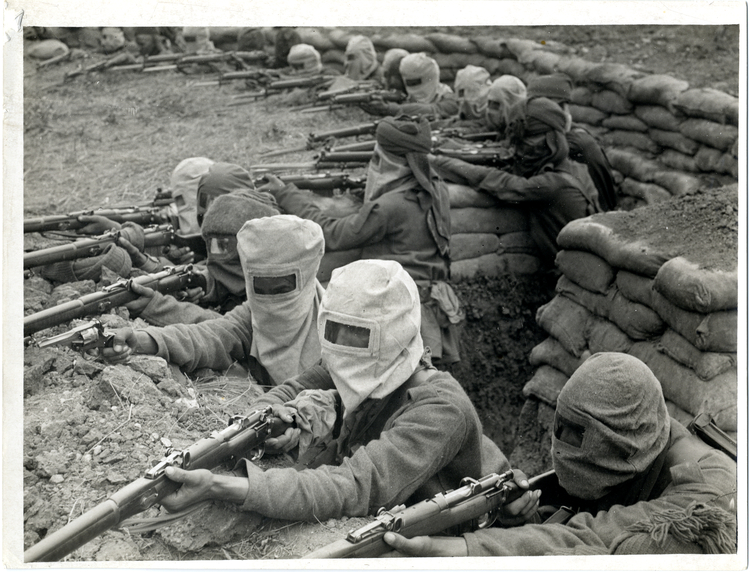
The British Army adopted this as the “British Smoke Hood”, and Macpherson was promptly put in charge of mass producing it. Eventually, over 2.5 million units were made in factories across Britain. It saved hundreds of thousands of lives during WWI and it became the prototype for future innovations in gas masks which would save millions. The small box respirator, developed and launched in late 1916, was one of those innovations that changed the look of warfare for decades.
During the war, Macpherson was twice mentioned in dispatches — an honour in which a superior officer told top military officials of an important contribution. After the war, Macpherson was made a Companion of the Order of St. Michael and St. George for his invention and his military service. He remained very involved in his community and treated patients with a humble and dedicated approach. During World War II he served in ship convoys in the North Atlantic. He was appointed Honorary Colonel of the 1st Company, Royal Canadian Army Medical Corps in 1957, and was awarded the Canadian Forces Decoration in 1964. The family home at 65 Rennie's Mill Road, where he served as secretary, treasurer and registrar for the Newfoundland Medical Society now has historic designation.